Edison NJ Locksmith Service Team
Local locksmith team
Apr 9, 2026 10 min read
You usually call a locksmith on a bad day — the knob won't turn, the key feels gritty, or the whole handle wobbles like it might fall off mid-twist. If you live near Oak Tree Road, commute through the Raritan Center, or own a rental unit off New Dover Road, a sticky or loose door knob lock isn't just annoying — it's a quiet security gap that tends to get worse before anyone fixes it. The good news is that most of these problems have clear, fixable causes, and knowing what's behind them helps you decide whether a little DIY maintenance will do the trick or whether it's time to call in a trained locksmith.
This guide walks you through the most common reasons a knob lock sticks, jams, or feels sloppy — and the fixes that actually hold up over time. We'll also cover when the real solution isn't the knob at all, but the mortise lock or internal latch hardware underneath it.
## Why Your Door Knob Lock Sticks: The Most Common Causes
A door knob lock that sticks or jams is almost never just 'old.' There's usually a specific mechanical reason behind it. The three most frequent culprits are: worn or dirty internal pins inside the cylinder, a misaligned door or strike plate causing the latch to bind, and dried or degraded lubrication. Over time — especially in New Jersey's humid summers and freezing winters — moisture works its way into the cylinder, causes small metal components to swell or corrode, and the smooth action you once had becomes a grinding fight. A knob lock that requires extra pressure to turn is telling you that the pins aren't moving freely, which is also the first sign that the lock's security is compromised.
A second, often overlooked cause is a sagging door. Edison's older housing stock — particularly the cape cods and colonials built through the 1960s and 70s — settles over decades. When a door frame shifts even a quarter of an inch, the latch bolt no longer lines up cleanly with the strike plate. The knob turns, but the latch scrapes instead of sliding, creating that sticky, resistant feeling. This is a structural issue, not a cylinder issue, and cleaning or replacing just the knob won't solve it.
## Loose Door Knob With Lock: What's Actually Working Itself Free
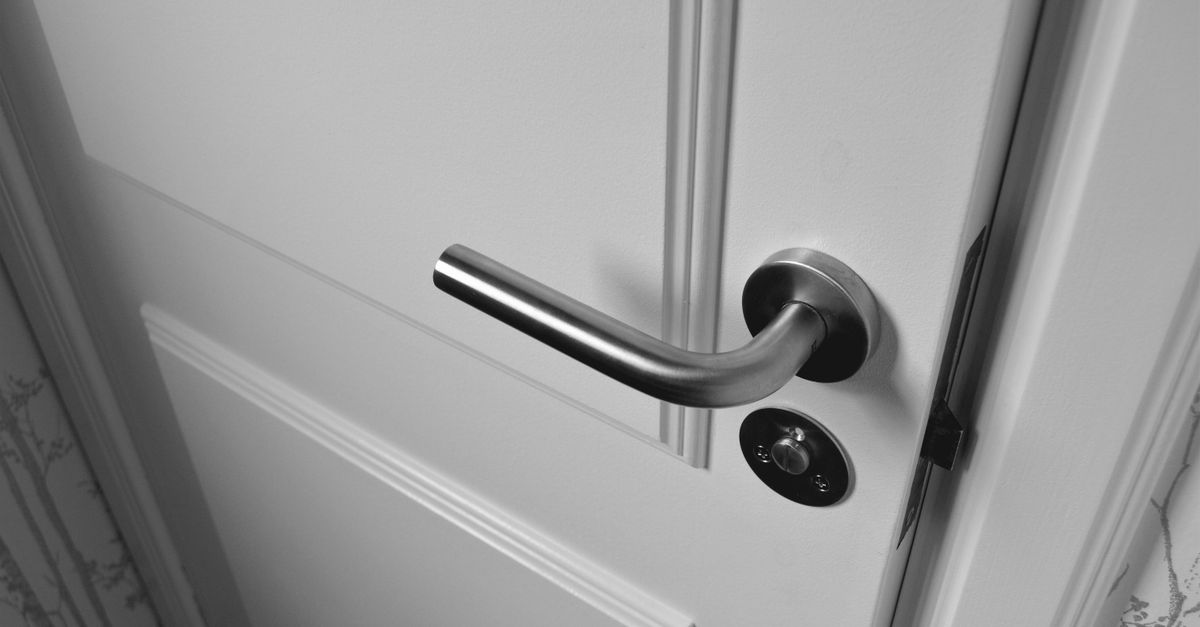
A wobbly door knob with lock hardware that spins freely or pulls away from the door is a different problem from sticking — and it signals a faster fix is needed. Most knob locks are held together by a set screw hidden under a small decorative cap on the knob's neck, or by through-bolts that run from the interior rose plate to the exterior. When those fasteners loosen through daily use, the knob develops play. Left alone, the spindle — the square metal rod connecting the two knobs — can work free enough that turning one side no longer retracts the latch at all. At that point, you're not just dealing with a wobble; you're dealing with a lockout.
For a bedroom door knob with lock, a loose knob is mostly inconvenient. For a front door or exterior entry, it's a security concern. A knob that spins or pulls outward can sometimes be manipulated in ways a properly secured one cannot. Tightening the set screw or through-bolts with a Phillips or hex key is a legitimate first step — but if the screw holes are stripped, or if the spindle itself is worn, hardware replacement is the right call. Our team handles knob lock replacements and upgrades to mortise lock systems across Edison and the surrounding Middlesex County area every week.
## Mortise Lock vs. Knob Lock: When the Real Problem Is Deeper
Many Edison homeowners don't realize that what they're grabbing is actually just the operating handle for a more complex internal mechanism. A mortise lock is a lock body that's set into a rectangular pocket (mortise) cut into the edge of the door itself. It handles both the latch and the deadbolt function through a single, integrated cartridge. When a mortise lock's internal cam or case wears out, the symptom often shows up as a stiff or unresponsive knob — because the handle is trying to actuate a mechanism that's faulty inside the door edge, not just at the surface. Replacing the visible knob does nothing if the mortise lock body is the issue.
Diagnosing this correctly is one of the key reasons it pays to have an experienced locksmith inspect the full door hardware, not just the piece you can grab. Our team carries replacement mortise lock cartridges and can assess whether a repair or a full replacement makes more sense — and we'll give you a clear, upfront price before any work begins. If you'd rather not wait, call us now at (732) 518-3692. We're available around the clock.
## Quick Fixes That Actually Last (and What to Skip)
For a sticking cylinder, the right lubricant matters. Skip WD-40 — it's a solvent, not a lubricant, and it strips out the thin oil on the pin springs, making the problem worse within weeks. Use a dry graphite lubricant or a purpose-made Teflon-based lock spray instead. Insert the key, spray a small amount into the keyway, and work the key in and out a dozen times. For exterior locks that have been exposed to weather, this alone often restores smooth operation. For a sticky latch bolt, check the strike plate alignment first — you should be able to see a wear mark or bright scratch on the plate where the latch is catching. Repositioning or filing the strike plate opening by a few millimeters frequently eliminates the bind entirely.
What you should skip: forcing a sticky lock knob with extra torque, spraying cooking oil or WD-40 into the keyway, and ignoring a wobble that's getting progressively worse. These don't fix the underlying issue and can accelerate internal wear to the point where a simple service call becomes a full hardware replacement. If you've tried the basics and the lock is still fighting you, the problem is mechanical — worn drivers, a cracked plug, or a failing mortise lock case — and it needs hands-on diagnosis. A skilled locksmith can identify in minutes what would take a homeowner an afternoon of guesswork.
## Lock & Security Services Edison NJ: When to Call a Professional
A local locksmith should feel easy to call — not like a last resort after you've exhausted every YouTube video. There are clear thresholds where professional help isn't just convenient, it's genuinely the more cost-effective path: when the lock cylinder has visible corrosion or cracks, when the latch bolt doesn't retract even with the knob fully turned, when a door knob with lock and key stops accepting the correct key smoothly, or when you're upgrading from a basic knob lock to a mortise lock system for better security. Commercial properties along Route 1 or in the Raritan Center business park have additional considerations — high-traffic doors wear hardware faster, and a commercial locksmith evaluation covers grade ratings, latch throw depth, and compatibility with access control systems that a standard residential call doesn't address.
Our team also handles situations that go beyond hardware: emergency locksmith calls for lockouts, rekeying after a lease change or lost key, and security assessments for homeowners who want peace of mind after a neighborhood incident. Every call starts the same way — we confirm the full scope of work and give you an exact price before anything is touched. The factors that shape that quote include the type of lock involved (knob lock, mortise lock, deadbolt), the time of day, travel distance, and whether parts need to be sourced. There are no surprise charges after the fact. For genuine emergencies, we're available 24/7 — call (732) 518-3692 any time.
## 25 Lock and Security Services We Provide in the Edison Area
Our team handles a wide range of residential, commercial, and automotive needs across Edison, NJ and Middlesex County. Here's what we offer: 1. Door knob lock repair and replacement 2. Mortise lock installation, repair, and cartridge replacement 3. Deadbolt installation and upgrade 4. Residential lockout response (emergency locksmith service) 5. Commercial lockout service for offices and storefronts 6. Lock rekeying after tenant turnover or lost keys 7. Master key system setup for multi-unit properties 8. High-security lock upgrades (Schlage, Kwikset, and comparable grades) 9. Strike plate repair and reinforcement 10. Door frame and jamb reinforcement 11. Knob lock-to-mortise lock conversion 12. Bedroom and interior door knob with lock installation 13. Sliding door lock repair and replacement 14. Patio door security bar and lock upgrades 15. Mailbox lock replacement 16. Padlock and hasp installation 17. Garage side-door lock service 18. Commercial-grade lever handle lock installation 19. Access control hardware installation 20. Safe opening and combination changes 21. Car lockout service (all makes and models) 22. Automotive key duplication and programming 23. Broken key extraction from door cylinders and ignitions 24. New key made from existing lock (key from lock service) 25. Security consultation and vulnerability walk-through for residential and commercial properties
Frequently asked questions
How much does a locksmith cost in NJ?+
There's no single flat rate — the price depends on several factors: the type of lock involved (a basic knob lock costs less to service than a full mortise lock replacement), the time of day (overnight and weekend emergency calls carry different rates than standard daytime visits), travel distance, and whether new parts are needed. What we always do is confirm the exact price with you before any work begins, so there are no surprises on the final invoice.
Can a locksmith make a new key from a lock?+
Yes. A trained locksmith can decode a lock cylinder — reading the cut depths of the pins inside — and cut a new working key without needing an existing copy. This is useful if you've lost all copies of a key, inherited a property without keys, or purchased a second-hand door knob with lock and key that didn't come with working keys. It works for most standard residential pin tumbler cylinders and many automotive locks as well.
What proof do I need for a locksmith?+
Any reputable locksmith will verify your right to access a property before performing a lockout or rekey service. For a home, expect to provide a government-issued photo ID and something that connects you to the address — a utility bill, lease agreement, or vehicle registration showing the property address. For a vehicle lockout, your driver's license and vehicle registration are standard. This process protects everyone, including you as the owner, and it's a normal, legitimate part of how professional locksmith calls work.
How much should an emergency locksmith cost in NJ?+
Emergency locksmith pricing in NJ varies based on the same core factors as any service call — lock type, parts required, distance, and time of day — with after-hours and overnight availability factored in. Rather than quote a range that may not apply to your specific situation, we provide an exact upfront price when you call. That figure accounts for all applicable variables so you know the full cost before we start. Call (732) 518-3692 any time — we answer 24/7 and will walk you through the details on the spot.